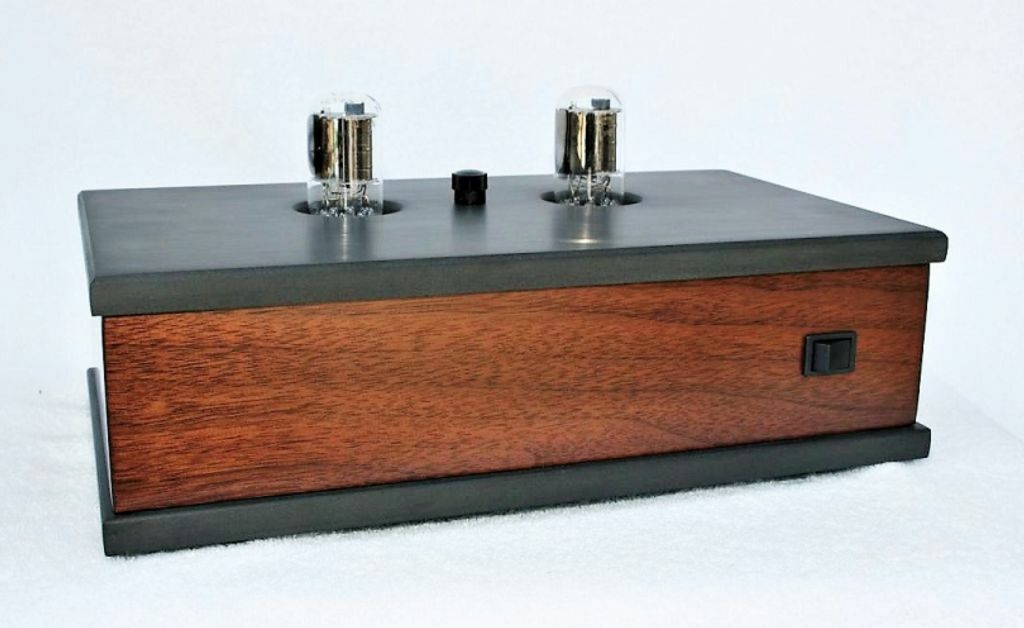
Roger is back and in this month’s Roger’s Corner we will discuss various types of amplifier classes of operation with a focus on Class A. Many audiophiles enjoy Class A amplification excessive heat generation be damned. For example, there are audiophiles with a preference for flea watt single-ended triode (SET) tube amplifiers pairing them with high efficiency speakers. In addition, higher watt push-pull Class A tube amplifiers serve the needs of audiophiles requiring more power to drive their speakers. Then there are solid state Class A amplifiers for audiophiles who prefer to not deal with tubes. While the benefits of Class A amplifiers are numerous, they also have deficiencies, especially zero feedback SET amplifiers. More on that in a bit.
Although considered “Best in Class” so to speak by many audiophiles there is a lot of misinformation as to what Class A circuit designs encompass and how they may compare to other amplifier classes of operation. Much of the misinformation is from industry “experts” who successfully influence the all too trusting uninformed audiophile with their “smarts”. The proliferation of this information was bad enough with the advent of the Internet, but now there is Artificial Intelligence (AI) collating information the accuracy of which is inconsistent on any subject let alone audio. The result is that all this misinformation over the years has somehow morphed into terminology seemingly describing each amplifier class of operation, be it A, AB1, AB2, or D, as having its own flavor(s). It is as if the engineering terminology associated with these amplifier classes of operation never existed. Thankfully Roger will clarify this.
Looking at this from a different perspective I think Ken Stevens from Convergent Audio Technology said it best when describing his Class A design philosophy. Essentially, he wanted his components to “sound like water” and that, “The amplifier should be as neutral and transparent as possible, with no distinct ‘flavor’ or coloration of its own. Music should flow through without adding any grit or electronic artifacts.” Simultaneously this description is both audiophile friendly and hits the mark on a reality level. Philosophically, a verse from the audio version of the Tao Te Ching if such a book existed. Roger shared the same design philosophy so I think he would have appreciated this description. In my opinion, this is how any audio designer who adheres to well-founded audio engineering principles designs their components.
Sadly, many audiophiles do not understand amplifier distortion characteristics. For example, approximately 25% of a SET amplifiers power is usable. A pair of 300B tubes producing 8 to 10 watts generates 2 or so watts of low distortion power where it yields the most musical and least colored presentation. A couple of watts is not bad as most listening is done below that level, but musical peaks often demand larger amounts of instantaneous power. After usable power is exceeded, the distortion continuously rises and reaches 10% at 8 watts (soft clipping). This distortion is primarily from higher order harmonics that the ear perceives as loudness cues and can trick listeners into thinking they are hearing dynamics. This then leads them to believe that SET amplifiers play louder than their watts, but what they are hearing are distortion artifacts.
Unlike higher order harmonics, the ear perceives the 2nd order harmonic as pleasing, and a good dose is inherent in a SET amplifier design. It is why they are often described as being “warm” or “romantic”. Also, some designers purposely introduce even more 2nd order harmonic distortion to appeal to audiophile “flavor” preferences. As an aside, Nelson Pass designed the H2 Harmonic Generator so audiophiles could add 2nd order harmonic distortion to suit their taste. Unfortunately, this brings us to the part of the discussion where we need to talk about the relationship between 2nd order harmonic distortion and intermodulation distortion (IMD). To put it simply, if there is a large amount of 2nd harmonic distortion, then there is a large amount of IMD. So, what about that IMD? Lazy fixes exist, but putting in the effort to design a better circuit that maximizes linearity is better. Unfortunately, lazy fixes win out more.
Too much 2nd order harmonic distortion is not benign on complex music. I know some audiophiles think the amplifier can see the notes heading its way and reacts accordingly. The reality is an amplifier only acts upon the instantaneous voltage it is given and has no idea what notes are being played. The amplifier will not figure out the 2nd harmonic of Beethoven’s 9th Symphony and then convert it into a low distortion audio signal. It just does not work that way. On complex musical passages, high levels of 2nd order harmonic distortion and IMD can result in sound that is muddy and soft, audiophile translated as “fat”. It can also result in distorted imaging, audiophile translated as “smeared”. Lastly, the resulting loss of transparency masks low level details and subtle nuances in the recording, audiophile translated as “veiled” or “dark”.
Once music becomes a complex signal and a SET amplifier becomes constrained by its usable power, one better hope IMD was addressed. This can easily be determined by the good old SMPTE test, 60 Hz and 6 kHz mixed at an amplitude ratio of 4:1 (where the 60 Hz tone is 12 dB higher than the 6 kHz tone). As an example, a nice treble note riding on the 60 Hz bass gets crushed in the valley of the 2nd harmonic wave. So, is it surprising an audiophile might wonder why their SET amplifier makes a mess of a symphony but reproduces a small ensemble beautifully. Perhaps they rationalize it as the amplifier being designed for specific types of music. Some designers do not even consider the relationship between 2nd order harmonic distortion and IMD, yet if they did the right measurements during testing it would be obvious.
Lastly, to clarify, Class AB is not a singular amplifier class of operation. Class AB amplifiers operate in Class A up to a certain point before moving into Class AB. I can imagine some audiophiles claiming they hear the amplifier switch from Class A to Class AB, but this is not audible. My Music Reference RM-10 MkII is Class AB1 and Class A up to the first 12 watts. With my listening preferences the amplifier operates in Class A nearly all the time, but I also get the benefits of Class AB1 operation namely less heat, less IMD distortion, and more efficiency. While class of operation can define an amplifier using engineering standards, it does not mean amplifiers from different classes of operation cannot perform similarly. Roger will take it from here and as the article was written in 1990 Class D is not discussed although it certainly would have been interesting to hear Roger’s thoughts on Class D if he were here with us today.
What Is Class A?
By Roger A. Modjeski
Amplifier classes of operation have been with us from the beginning of "Amplifier Time." The first amplifier engineers of the 1920s developed the terms Class A, B, and C to denote the operating bias of the output tubes in power amplifiers. Low level (preamplifier) stages are always Class A as their output power is nil, and a single-ended voltage amplifier is most easily made in Class A. Our modern preamplifiers are Class A, as are the drivers in most power amplifiers. It is only in the output stage where we find the "Class" distinction, and what a distinction it has become. Everyone wants a Class A amplifier. It has become a seal of approval, and the audio industry is obliging consumers. The term is emblazoned upon advertising, literature, and even on the front panel of some units. What follows explains Class A technically, and how to easily spot amplifiers that fraudulently claim to be something they are not.
First, let us define the classes of operation as the authors intended. I will use vacuum tube terms, although this is applicable to transistors as well. Class A is a single-ended or push-pull amplifier where the grid is negatively biased so that it is about half-way between 0 volts and the more negative value, which will cause the tube to "cut off" the flow of plate (output) current. Thus, the tube is about halfway between full-on and full-off and can equally swing around this center point with minimal distortion. The ratio between grid swing and plate swing is not linear, so there is some distortion.
Read More